
Microsoft
Foundations: Visual Studio & .NET
I've always believed that the biggest leverage in engineering comes from making developers more productive. Microsoft is where I got to act on that, and over 15 years, the work kept expanding. I started as a software engineer building Visual Studio.Net IDE features, moved into running the automation infrastructure that shipped Visual Studio, and eventually drove CLR releases that brought .NET Framework to the entire Windows developer ecosystem. This isn't a case study about solving one problem. It's about the foundation that got built, and a bar for quality engineering I've carried into every role since.
Role
Software Engineer / Engineering Manager / Program Manager
Timeline
1997 – 2012
The Challenge
The challenge wasn't fixing a broken system. It was building a new foundation from scratch. The .NET Framework took 4–5 years to develop, with Visual Studio evolving alongside it through multiple iterations. Getting both right required sustained coordination across dozens of teams where breaking anything was not an option. We were building a new runtime, C# as a new language, a major Visual Basic upgrade, and IDE tooling that had to keep pace with all of it. At the CLR level, the challenge expanded, driving company-wide adoption of newer .NET versions across SQL Server, Xbox, Office, and Azure, while navigating versioning, compatibility, and ecosystem dynamics that affected every developer building on Windows.
Journey
- —Spent six years as a software engineer on the Visual J++ and then Visual Studio IDE teams, building Editor, Debugger, and Visual Studio Extensibility features as .NET was being developed alongside C# and Visual Basic.NET. Drove competitive analysis against Eclipse and other IDEs gaining traction, and pushed quality rigor across security, performance, reliability, accessibility, and usability.
- —Transitioned to engineering manager, leading a cross-functional team of 8 engineers and 26 contractors to deliver build and test automation infrastructure for Visual Studio.NET. Co-architected a test automation framework that got adopted beyond Visual Studio across other Microsoft products. Partnered with PM leadership to make the Visual Studio SDK a free offering, which removed a significant barrier to third-party ecosystem development and directly strengthened Microsoft's competitive position against Eclipse.
- —Moved to the .NET Framework Common Language Runtime team as Program Manager, going deeper from IDE to frameworks, working with Garbage Collection, Threading, and .NET Framework optimizations. Drove CLR releases within .NET Framework and led Microsoft-wide upgrades to newer .NET versions across SQL Server, Xbox, Office, and Azure. Partnered with Fortune 500 companies on adoption, which built real customer empathy around versioning, compatibility, and cross-product ecosystem dynamics. Earned the trust of Engineering VPs, Directors, and senior Architects through precision and consistent delivery.
Impact
- —Shipped multiple versions of Visual Studio .NET with IDE features evolved between VS.NET 2002 through 2008. Visual Studio SDK made free, enabling a third-party developer ecosystem and improving competitive positioning against Eclipse.
- —.NET Framework 3.5 through 4.5 shipped. CLR releases delivered with company-wide .NET 4.5 upgrades across SQL Server, Xbox, Office, and Azure to support Windows 8 based releases across Microsoft products.
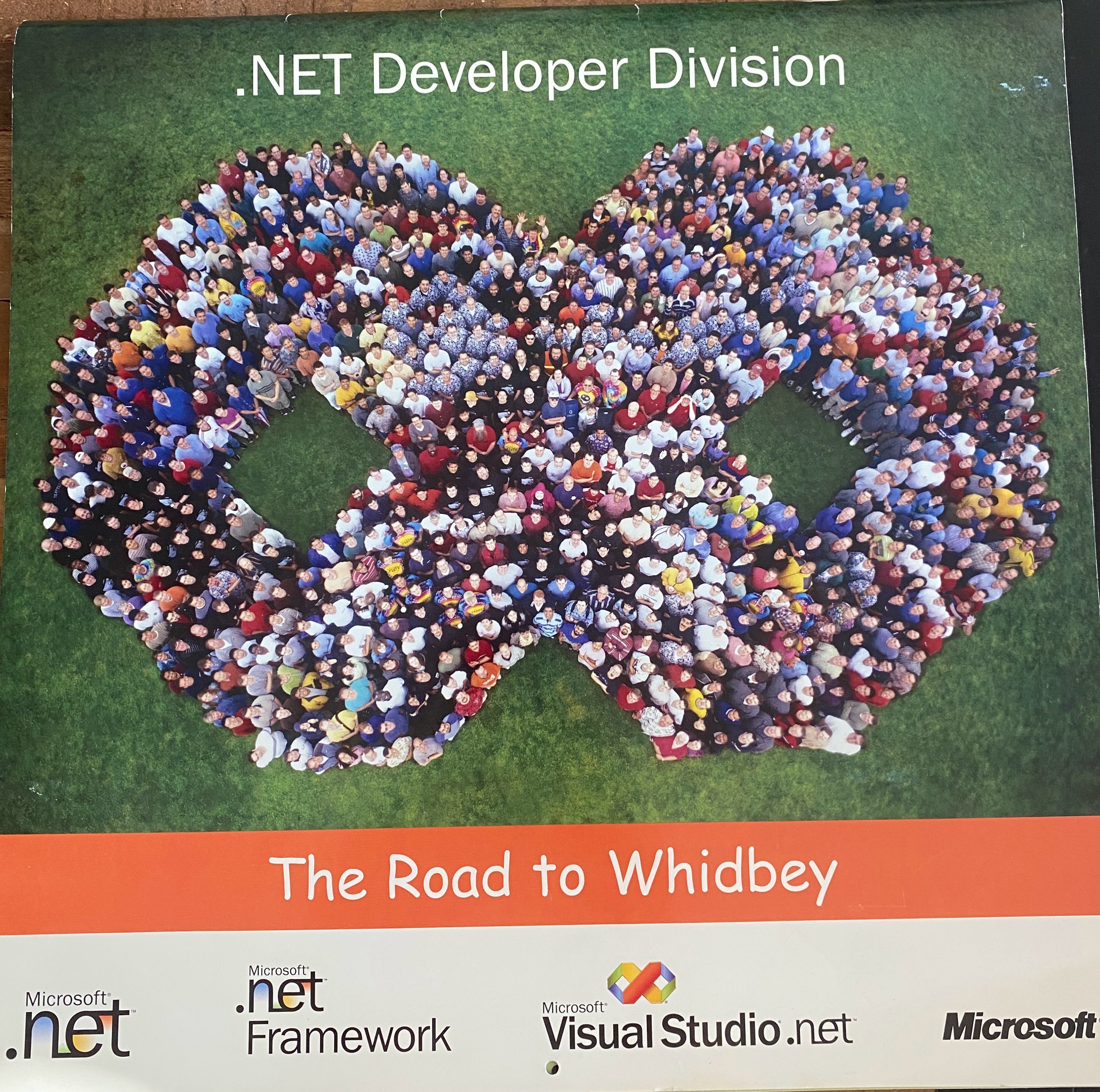
The team that shipped Visual Studio .NET
What I Learned
- —Developer productivity has always been my career thread. The right tools in the right hands compound, and I believe that holds beyond software too.
- —Microsoft set a standard for quality that I've carried into every role since. When millions of developers depend on what you ship, you learn fast what it really means to get it right.
- —Going deeper pays dividends. Moving from IDE to frameworks to CLR taught versioning, ecosystem dynamics, and cross-product adoption in ways that surface-level work couldn't. Technical depth is what lets you ask the right questions at the right level.
- —The right peers and leaders shape a career. Being trusted by Engineering VPs and Directors early, and being surrounded by people I could genuinely learn from, was a privilege. That experience shaped how I think about investing in the people around me.
What Others Say
“It's fantastic having someone who, no matter what kind of project management problem we have, with no help or supervision, can understand what needs to be done and make all the right things happen. You clearly have the ability to make big contributions in very complex project management tasks that go across the entire Division, or across multiple Divisions. You have the ability to proactively find and create important opportunities.”
Joshua T. Goodman
Manager, Microsoft
“I'm always amazed by how she is able to scale, keep her cool amidst constant noise in her world. I think she is ready for bigger set of challenges than CLR tactics.”
Anonymous
Peer, Microsoft
“You are clearly the steward of the CLR team's engineering — you set the rhythm, communicate the team-wide goals, connect people when needed, and overall ensure that team success is the highest priority. It's hard to imagine anyone else doing any better than you have. I learned from you how to run a division-wide initiative with the right balance of pragmatism and flexibility. Those were lessons I consider critical to my success — and you taught me those lessons even before you were a PM.”
Brandon Bray
Manager, Microsoft