
Meta
Building Performance at Scale
When Facebook shifted from web to mobile in 2013, the apps weren't ready. During my tenure at Meta, I drove the program that transformed mobile performance across the Facebook family of apps. We built the observability infrastructure that made data-driven decisions possible and delivered 83% and 64% reductions in Android and iOS startup times. What started as a mobile performance push eventually grew into a company-wide priority across 200+ engineers and four major apps, expanding from mobile to web and from performance to reliability.
Role
Group Technical Program Manager
Timeline
2014 – 2020
The Challenge
The Facebook app on Android took 30 seconds to start. On iOS, 11 seconds. User research showed people switched away after 5 seconds, so we were losing users and revenue due to every slow launch. But the surface problem masked a deeper structural one. Teams were measuring performance differently, which meant that local improvements could coexist with systemic degradation. Nobody had the full picture. There was no tooling to analyze production data, no engineering expertise on product teams to do performance work, and no shared ownership. The team driving the effort didn't own the product experiences they were trying to fix. On top of that, 'Move Fast' was a core company value. Getting engineers to slow down and care about performance required changing how the entire org thought about quality.
Approach
- —Defined the program's end-to-end strategy: Instrument, Monitor, Analyze, Optimize. We were starting from scratch with no standardized telemetry, no shared tooling, and no ownership for performance work across product orgs.
- —Led the data consistency and tooling work. We consolidated three instrumentation frameworks into one, defined device year class (high/mid/low-end hardware tiers), and built the naming schema that finally allowed teams to compare performance data across devices, OS versions, countries, and network conditions. For the first time, teams could make apples-to-apples comparisons across releases.
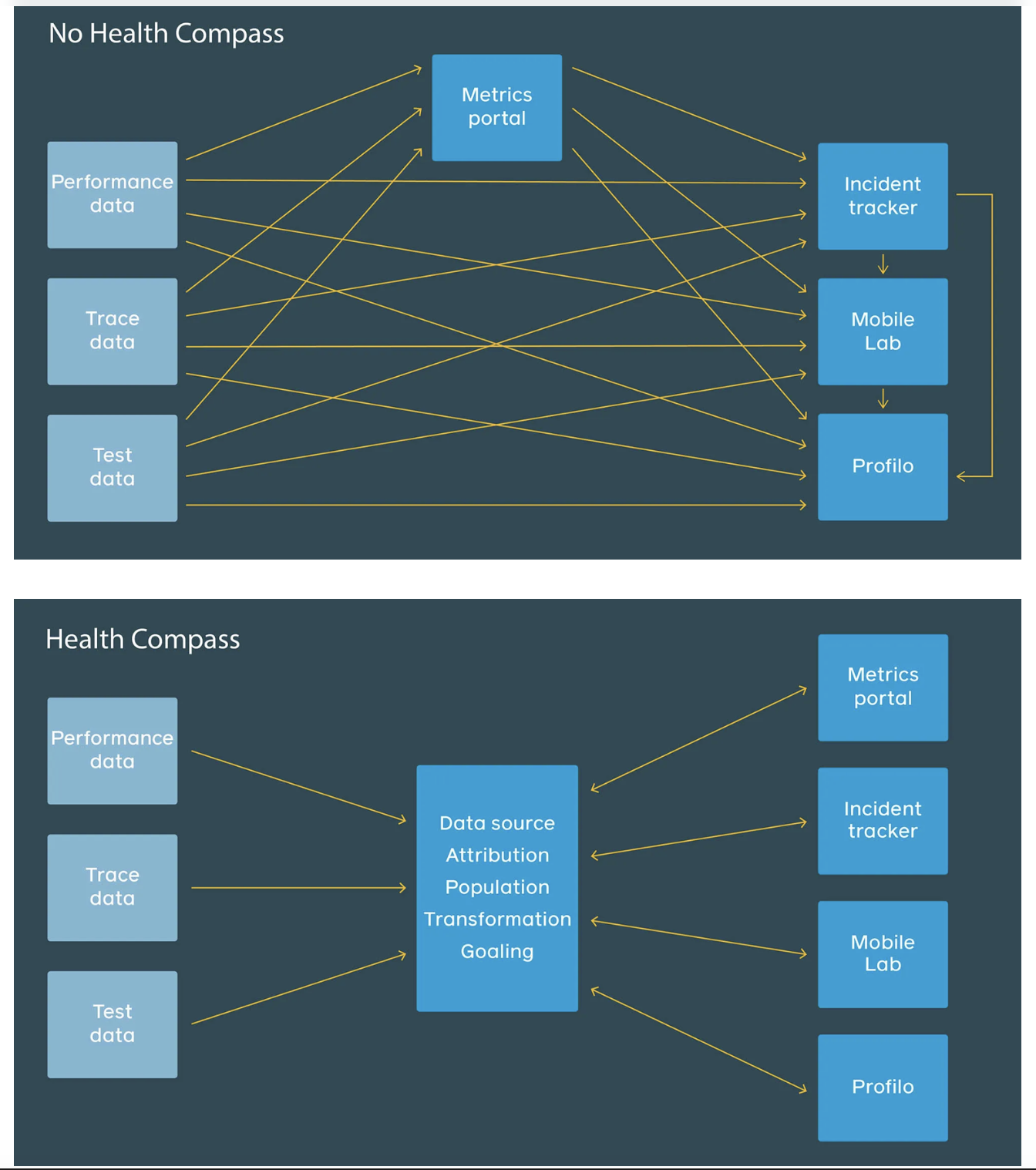
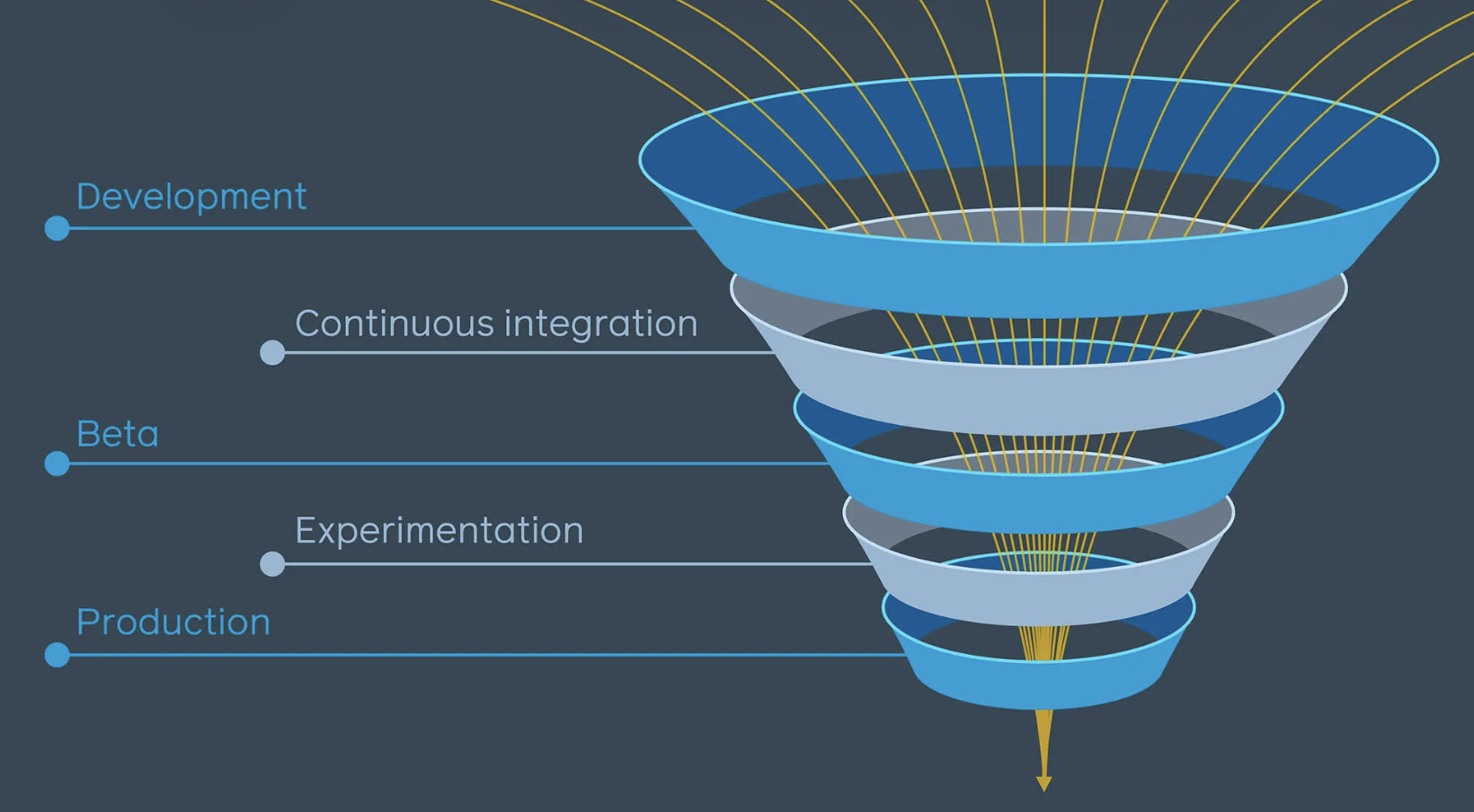
- —Built Health Compass, a unified performance tooling platform, that caught regressions pre-production, in beta, and in production with aggregate trace analysis across multiple dimensions. We translated what had been a fragmented engineering pain point into a product that shifted the team from reactive firefighting to proactive detection.
- —Partnered with engineering teams to drive targeted product optimizations grounded in data. This included Redex for bytecode optimization on older Android versions, Betamaps for on-demand class loading, caching strategy changes, and pre-fetch principles built on network and device signals rather than assumption.
- —Evolved the program from looking at latency on average to p75 device-segmented goals. This reframed how the org thought about performance across user segments, hardware tiers, and network conditions, and changed which problems were worth solving first.
- —Helped build and scale PRE (Performance, Reliability and Efficiency) teams across Facebook, Messenger, Instagram, and FB Lite, growing from one team of 7–10 engineers to 200+ engineers.
- —Drove the cultural shift that made the program sustainable. We aligned stakeholders from individual engineers to the CEO, built education and training programs across the org, and made the case that performance wasn't optional, even pushing back on a feature the CEO wanted to ship.
Results
- —83% reduction in Android app start time (from 30 seconds to under 5 seconds) and 64% reduction in iOS app start time (from 11 seconds to under 4 seconds).
- —Health Compass shipped. Unified tooling across development, CI, beta, experimentation, and production, catching regressions before they reached users.
- —Measurement matured from ~25 average metrics to 150+ p75 device-segmented goals, enabling prioritization by country, hardware tier, and network conditions.
- —The program scaled from a team of 7–10 engineers to 200+ engineers across four major apps, and the scope expanded from mobile performance to web and from performance to reliability. The infrastructure we built outlasted the original mandate.
- —Performance culture established company-wide, from individual contributors to CEO-level alignment on velocity vs. quality trade-offs, ensuring topline company metrics didn't take a hit.
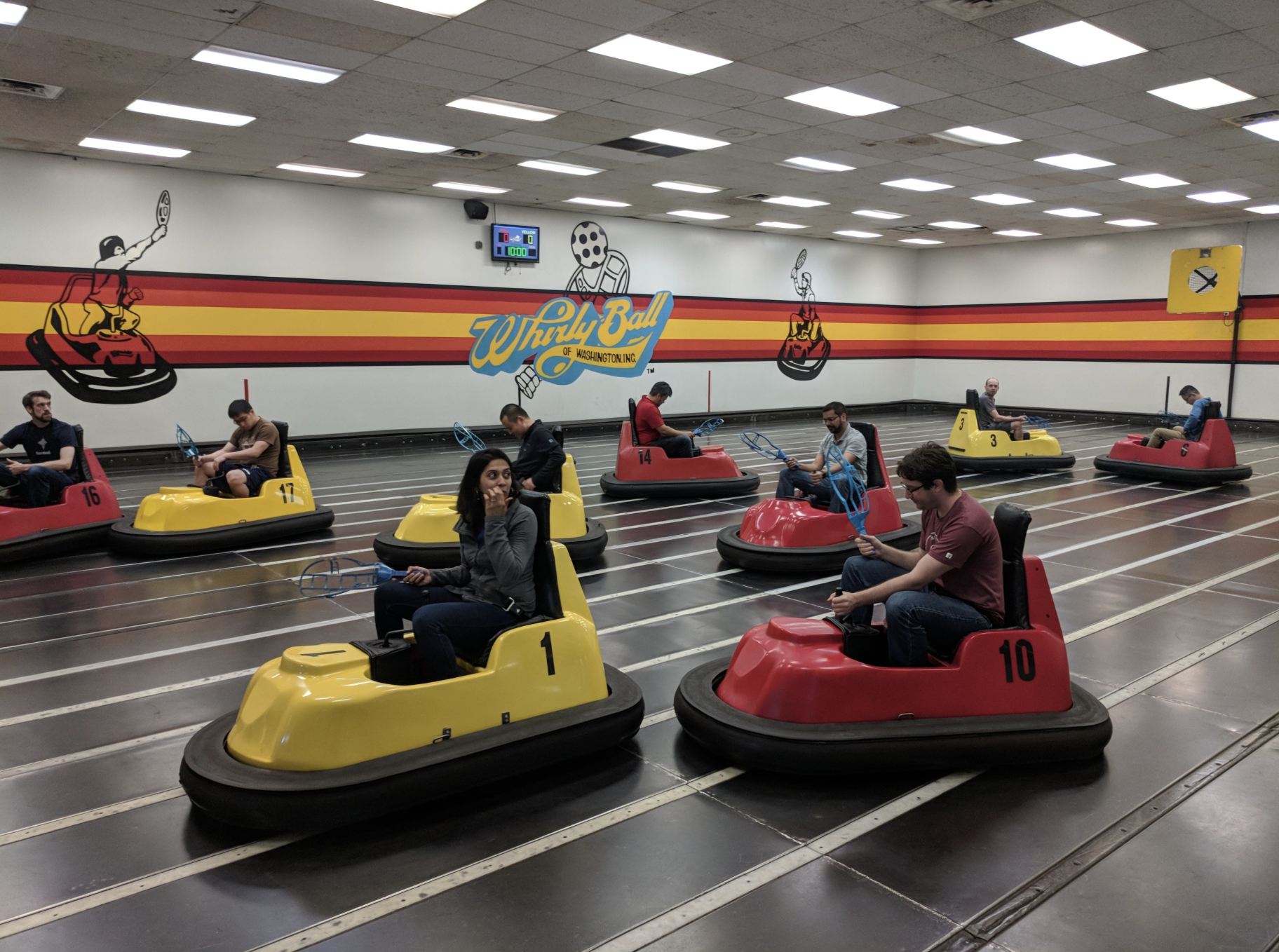
How fast can you make whirlyball cars move?
References
Health Compass Tooling
What I Learned
- —Big companies don't have it figured out. I came in assuming a company like Facebook would have the fundamentals in place. They didn't. That gap was the opportunity.
- —Data before decisions. The most important investment in the first six months was making the data trustworthy enough to optimize from.
- —Influencing cross-functional partner teams without org chart authority requires building trust one conversation at a time.
- —Sustainable change takes longer than the first win. Startup time improved in three years, but building the culture, teams, and tooling that made performance permanent took five.
What Others Say
“Kalpana took on significantly more than expected this half and delivered on all of it, while ramping up new team members. This was seriously impressive — I actually expected her to break in unusual ways this half and it just didn't happen.”
Joel Pobar
Director of Engineering
“Kalpana is a central member of our team. She has built enormous respect across the entire engineering discipline, and is trusted by many when it comes to driving results across the organization. Helping land Ashish as a TPM was a huge move — and that relationship became one of the key pieces of glue in our cross-functional partnership. I think it would be easy to underestimate just how much of a difference she has made. Very, very glad she's here.”
Ian Carmichael
Director of Engineering
“Kalpana was the driving force in kicking off the training and education tracks for the Core App performance push, and in aligning our planning with the Product Foundation team. She optimizes for the org over her own visibility — I've never seen her approach a conversation with ego or attachment to the eventual decision, always open and curious about what's needed. She is a force of nature when it comes to making us all get things done.”
Sambavi M
Director of Engineering
“Kal is definitely — and I said this last half, but it bears repeating — the best manager I've had at Facebook. As they always say, it's generally managers that keep employees around. Kal's an exemplar of that saying. She has 100% supported me in whatever decision I make, without at all being pushy — just very interested in my happiness.”
Bradford Cottel
Senior TPM